Most creators get this completely backwards. They write the title last, slap something vague and dramatic on it, and wonder why their CTR tanks. Or they go full clickbait mode, get the clicks, and then watch their retention and algorithm performance crater because the video didn't deliver what the title promised.
There's a better way. And once you understand it, you'll stop treating titles like a guessing game.
Writing YouTube Titles That Get Clicks Without Clickbait
Here's the thing about clickbait: it works once. Maybe twice. Then your audience learns not to trust you, and YouTube's algorithm figures out that your videos have high CTR but terrible watch time. That combo actively hurts you. A title that brings in slightly fewer clicks but attracts the right viewers will almost always outperform a clickbait title in the long run. The algorithm is smarter than it used to be about this stuff.
So the goal isn't just "get the click." It's "get the RIGHT click from someone who will actually watch."
Start With the Searcher's Actual Words
This one trips up a lot of new creators. You make a video about budgeting for beginners and title it "How I Transformed My Finances in 30 Days." Sounds punchy, right? But nobody is typing that into YouTube's search bar. They're typing "how to budget for beginners" or "beginner budgeting tips."
Your title needs to meet people where they already are. Use the language your audience actually uses, not the fancy version you came up with while feeling inspired.
Real talk: spend five minutes in YouTube's search bar before you finalize any title. Start typing your topic and look at the autocomplete suggestions. Those are real searches from real people. That's your free keyword research right there.
The Curiosity Gap Is a Tool, Not a Trick
There's a version of curiosity that's genuinely useful and a version that's manipulative. The difference is whether your video actually delivers on the implied promise.
"I Did 100 Push-Ups Every Day for 30 Days" works because the curiosity (what happened?) is answered directly in the video. "You Won't BELIEVE What Happened When I Did Push-Ups" is the same idea dressed up as a scam. Sound familiar?
Leave a gap between what the viewer knows and what they want to know, but always make sure your video fills that gap. If you frame it as a mystery, solve the mystery. If you promise results, show the results. Simple.
Numbers and Specificity Do the Heavy Lifting
Vague titles perform worse. That's just the data. "How to Get More Views" is a weaker title than "How I Got 50,000 Views With One Video (No Subscribers)." The second one is specific, personal, and signals that the creator actually has something concrete to share.
Numbers anchor the promise. They tell the viewer exactly what they're getting. "5 Budget Recipes" is more clickable than "Easy Budget Recipes" because the viewer knows what to expect before they even click. Less cognitive work to decide.
Year tags work too, especially in fast-moving niches. If someone's searching for the best tools or strategies in a given field, they want current info. Tossing "2026" in the title costs you nothing and signals freshness. Low effort, real return.
Front-Load the Most Important Words
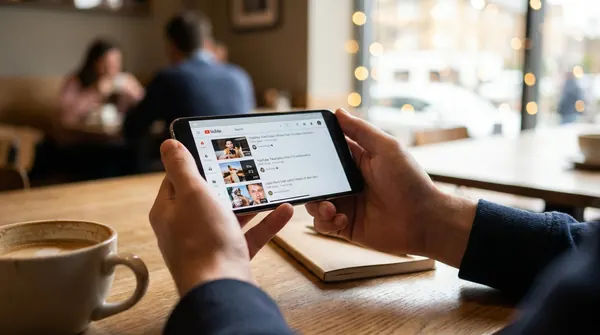
YouTube truncates titles on mobile. A lot. So if your keyword or hook is buried at the end, half your potential audience never sees it.
Put the most compelling part of your title in the first 40-50 characters. The rest is bonus. This also helps with SEO since search engines weight the beginning of the title more heavily anyway. Two wins for the price of one.
A title like "The Secret Formula Creators Use to Get More Views on YouTube Consistently in 2026" is doing too much. Trim the fat. "The Formula That Gets YouTube Views Every Time" hits harder and fits better.
Test Your Titles Before You Commit
YouTube has its own A/B testing feature now, and if you're not using it you're leaving real data on the table. But honestly, even before you upload, you can gut-check your title by asking one question: "If I saw this on my feed, would I click it?"
Not "would a random person click it." Would YOU click it? If you feel even slightly meh about your own title, your audience will feel the same way.
Tools can help here too. Voclify's title generator is something I've used when I'm staring at a blank title field and my brain has completely given up. You throw in your topic and it gives you a bunch of angles to work from. It's not going to write the perfect title for you on its own, but it's genuinely useful for breaking the mental block and seeing variations you wouldn't have thought of. It's part of a broader YouTube creator toolkit that also handles descriptions, scripts, and more, which makes it handy when you're batching content.
Emotion Without Exaggeration
Your title should make someone feel something. Curiosity, FOMO, excitement, relief. But there's a huge difference between triggering real emotion and just shouting in all caps.
"This Changed How I Edit Forever" hits an emotional note (transformation, discovery) without being dishonest. "THIS WILL BLOW YOUR MIND!!!" is the kind of title that makes people scroll faster.
Write titles the same way you'd recommend something to a friend. Enthusiastic but honest. Specific but not exhausting. You're not trying to trick someone into your video. You're trying to let the right person know that this video is exactly what they've been looking for.
And if your video genuinely is great? The title just needs to get out of its way.
Avoid These Common Title Mistakes
- Being too clever: Wordplay and inside jokes don't translate to people who don't know you yet. Clarity beats cleverness every time for new audiences.
- Stuffing keywords awkwardly: "Best YouTube Title Tips YouTube SEO YouTube Growth 2026" is not a title. It's a cry for help.
- Making it too long: Somewhere around 60 characters is a solid target. Long enough to be descriptive, short enough to actually be read.
- Copying bigger creators word-for-word: What works for MrBeast works because of MrBeast's brand. Model the structure, not the exact words.
- Being vague to seem mysterious: "You Need to See This" tells me nothing. Tell me what I need to see and why I should care.
Quick Takeaways
- Match your title to the words your audience actually searches, not what sounds good in your head
- Use the curiosity gap honestly. Only tease what your video actually delivers
- Specific titles (numbers, real results, concrete promises) outperform vague ones consistently
- Put your strongest words in the first 40-50 characters
- Test variations and pay attention to what your own CTR data tells you
- Emotion is good. Exaggeration is not. There's a line and your audience knows when you've crossed it
The best title you'll ever write is the one that makes the exact right person stop scrolling and think "this is for me." That's the whole job. Not tricking someone into clicking. Not gaming the algorithm with shock value. Just a clear, compelling, honest signal that your video has something worth their time.
Get that right consistently, and your CTR will climb without you ever needing to write something you'd be embarrassed to stand behind.