Most YouTube SEO advice is stuck in 2019. Add your keyword to the title. Stuff your description with tags. Repeat. And honestly, some of that still matters, but if that's your whole strategy in 2026, you're leaving a lot of views on the table.
Here's what's actually changed: YouTube's algorithm has gotten scarily good at understanding whether real people are enjoying your video. Not just clicking it. Actually watching, engaging, and coming back for more. The SEO side of things now has to account for all of that, not just metadata.
So let's talk about what YouTube SEO actually looks like this year, what's worth your time, and what's just noise.
Keyword Research Is Still the Foundation
I know, I know. Everyone says keyword research. But there's a difference between finding keywords and actually understanding search intent, and most creators skip the second part entirely.
The goal isn't just to find a phrase people type in. It's to understand what they want when they type it. Are they trying to solve a problem? Learn something? Get entertained? Your video has to match that intent, or YouTube will figure out that people are leaving disappointed and quietly stop showing it to anyone.
For tools, the ones I keep seeing recommended for good reason are vidIQ, TubeBuddy, and Google Trends. They're solid for spotting what's gaining momentum in your niche before it peaks. Ahrefs and Semrush work too if you're already using them for website SEO and want to cross-reference search volumes.
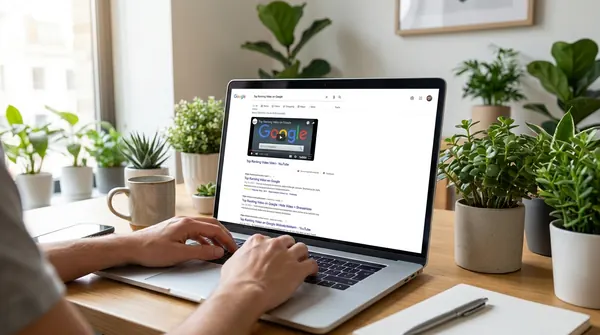
One thing worth doing in 2026: search your target keyword on YouTube and actually watch the top-ranking videos. Notice what angle they take. Notice what they don't cover. That gap is your opportunity. Target the same keyword but give people something those videos missed and you've got a real shot at knocking them down over time.
Also, long-tail keywords are underrated. "YouTube SEO" is brutal to compete for. "YouTube SEO for cooking channels 2026" is a different story. Smaller search volume, way less competition, and often higher intent from people who are genuinely looking for what you make.
Tools like Voclify's title generator can help you work backward from a topic to titles that already have the right keyword placement built in, which saves a lot of time when you're trying to do this for every video.
Titles and Thumbnails: The CTR Game
Your video could be perfectly optimized in every other way, and if nobody clicks it, none of that matters. Click-through rate is one of the clearest signals YouTube uses to decide whether your video deserves more distribution. Low CTR basically tells the algorithm "people saw this and weren't interested."
For titles in 2026, the thing that's working is specificity combined with curiosity. Not clickbait (YouTube is pretty good at identifying empty promise titles now, and viewers definitely are), but titles that make someone feel like they're going to get something specific and useful. The keyword should appear early in the title, ideally in the first three or four words.
One mistake I see constantly: titles written for the algorithm that sound robotic to an actual human. "Best YouTube SEO Tips 2026 Rank Videos Fast" reads like a keyword list, not a title. "Why Your Videos Aren't Ranking (Fix This First)" says the same thing and makes someone want to click.
Thumbnails work alongside your title, not independently. They should tell the same story in a different format. If your title hints at a transformation or a mistake to avoid, your thumbnail should visually reinforce that. Contrasting colors, a clear focal point, minimal text, readable at small size. YouTube just rolled out easier thumbnail tools in YouTube Studio including AI generation, which is helpful for iteration.
Test your thumbnails. Seriously. If you're not A/B testing them, you're just guessing. YouTube's built-in thumbnail testing feature (or tools like TubeBuddy's A/B testing) lets you see what's actually getting people to click, which is way more useful than opinions.
The Viewer Behavior Signals That Now Drive Rankings
This is where 2026 YouTube SEO gets genuinely different from what worked five years ago. YouTube now weighs viewer behavior signals heavily, and that includes watch time, audience retention, click-through rate, likes, comments, and what people do after watching your video.
Watch time is not just total minutes watched. It's the percentage of your video that people actually sit through. A 10-minute video where people bail at 3 minutes is a bad signal. A 3-minute video where people watch 90% of it is a great signal. This is why short, tight, well-paced content can outrank longer videos that drag.
Audience retention drop-off is something every creator should be obsessing over in YouTube Analytics. Where exactly are people leaving? Is it the intro? Is there a specific section that kills momentum? If you can identify and fix the drop-off points, your retention improves, and your rankings follow.
Real talk: the best SEO strategy for watch time is just making your video better. Hook people in the first 30 seconds. Cut anything that doesn't serve the viewer. Don't repeat yourself. End with something that makes people want to stick around. None of that is a hack, it's just good content.
Comments and engagement also matter, both as a signal to YouTube and because they drive community. Videos with active comment sections tend to get more distribution. Asking a specific question at the end of your video (not a generic "let me know in the comments") consistently drives better response.
Metadata: Descriptions, Tags, and Chapters
Metadata is not where the magic happens in 2026, but getting it wrong will hurt you. Think of it less as a ranking tool and more as making sure YouTube (and Google) can correctly understand what your video is about.
Your video description should start with your primary keyword in the first sentence. Not awkwardly stuffed in, just naturally used. Then write 150 to 300 words that genuinely describe what the video covers. This isn't just for SEO, viewers also read descriptions to decide if they want to watch, especially on longer videos.
Video chapters are one of the most underused metadata features right now. Adding timestamps with descriptive chapter titles does a few things: it helps viewers navigate, it signals to YouTube exactly what topics your video covers, and it can get your video surfaced in Google's featured results for specific chapter sections. If your video covers multiple distinct topics, chapters are a no-brainer.
Tags are less powerful than they used to be, but they're still worth doing correctly. Use your main keyword, a few variations, and a couple of broader category terms. Don't use hundreds of tags hoping to catch everything. YouTube itself has said tags are one of the least important ranking signals, so don't spend more than three minutes on them.
One thing a lot of creators miss: your filename before you upload matters a little. Naming your file "my-video-final-v3.mp4" versus "youtube-seo-tips-2026.mp4" is a small signal, but it's an easy win. Rename your files before uploading.

AI Overviews and Cross-Platform SEO
Something genuinely new in 2026 is YouTube content starting to appear in Google's AI Overviews. This is a big deal and not enough creators are thinking about it yet.
The way it works: YouTube videos, especially ones with transcripts, detailed descriptions, and strong authority signals, are getting cited directly in AI-generated search responses. So your video SEO now has implications beyond YouTube's own search, it can earn visibility in Google results in a whole new way.
The practical advice here is to treat your video transcript as a piece of content. Adding full auto-generated or manual captions to your videos creates a crawlable text layer that both YouTube and Google can read. Some creators are also embedding their videos in blog posts with the full transcript included, which creates a bidirectional signal that seems to help with AI Overview citations.
This cross-platform approach is becoming more important as YouTube and Google continue to integrate. A video that's well-optimized on YouTube but has no web presence at all is leaving discoverability on the table. Even a simple blog post embedding the video and summarizing its key points can make a meaningful difference.
It's also worth thinking about multimodal search, which is the idea that people are increasingly searching with voice, images, and conversational queries rather than typed keywords. Optimizing your content to answer clear, specific questions (not just target broad topics) positions you well for this shift.
Consistency and Channel Authority
Here's a thing that doesn't get talked about enough in the context of YouTube SEO: your channel's overall authority and consistency affect how individual videos rank.
YouTube looks at your channel's history. How often do you upload? How do your videos generally perform? How engaged is your audience? A video published on a channel with strong historical signals will get a better initial push than the exact same video published on a brand new channel. That's just how it works.
This doesn't mean new channels can't rank. They absolutely can, especially on specific long-tail keywords where established channels haven't made content. But it does mean that consistency is an SEO strategy, not just a growth strategy. Regular uploads build authority over time, and that authority compounds.
Playlists are another channel-level tool that helps SEO. Organizing your videos into thematic playlists signals topical authority to YouTube, keeps viewers on your channel longer (which is a great engagement signal), and can rank independently in YouTube search. If you've never built out a proper playlist structure, it's one of those low-effort wins that adds up.
For creators managing all of this, having a tool that helps with the content production side makes staying consistent way easier. Tools like Voclify handle things like title generation, descriptions, and scripts, which means less time on admin and more time on the actual content. Full disclosure, Voclify is our product, so take that for what it's worth, but the problem it solves is real.
Quick Summary: What to Actually Focus On
- Keyword research with intent matching: Find what people search for AND understand what they actually want when they search it
- Titles that earn clicks: Keyword early, specific benefit, sounds like a human wrote it
- Thumbnails that tell a story: Works with your title, clear at small size, A/B test them
- Viewer behavior signals: Retention, watch time, and engagement now drive ranking as much as metadata does
- Metadata done right: Keyword in the first line of your description, chapters on longer videos, clean tags
- Captions and transcripts: Required for AI Overview visibility, good for accessibility, better for SEO
- Channel consistency: Regular uploads build authority that makes all your videos perform better over time
- Cross-platform presence: Even a simple blog post embedding your video can boost discoverability
The honest version of YouTube SEO in 2026 is that you can't trick your way to ranking anymore. The algorithm is too good at measuring whether people actually like your stuff. So the best SEO strategy and the best content strategy are basically the same thing: make videos that the right people actually want to watch, package them so those people know to click, and show up consistently enough that YouTube learns to trust your channel.
That's it. That's the whole thing.
If you want help with the packaging side, specifically titles and descriptions that hit the right keywords without sounding robotic, the title generator and video description generator at Voclify are worth a look. Not perfect for every niche, but for getting a solid starting point fast, genuinely useful.
FAQ
How important are tags for YouTube SEO in 2026?
Tags are honestly one of the least important ranking signals now. YouTube has said publicly that titles, thumbnails, and descriptions are far more useful for helping the algorithm understand your content. That said, it takes about 2 minutes to add 8 to 10 relevant tags, so there's no reason to skip them entirely. Use your main keyword, a couple of variations, and a broad category term, then move on.
How long should my YouTube video description be for SEO?
Aim for at least 150 to 300 words. Your primary keyword should appear in the first sentence naturally. The description should actually describe what the video covers, not just be a block of repeated keywords. YouTube can read and index your description text, and Google uses it too, so a well-written description is worth the 10 minutes it takes.
Does posting frequency actually affect how well my videos rank?
Yes, indirectly. Posting consistently builds channel authority over time, and YouTube tends to give a stronger initial push to videos from channels with reliable upload patterns and good historical performance. Research from Backlinko's analysis of over 1.3 million YouTube videos found a correlation between channel activity and video performance. Once a week is a common recommendation, but the most important thing is finding a pace you can genuinely maintain without sacrificing quality.

Get more of this in your Google results
Add voclify.io as a preferred source and Google shows you more of our articles in Search and AI Mode.