You hit 1,000 subscribers. You cleared 4,000 watch hours. You submitted your monetization application feeling pretty good about yourself. Then 30 days later, YouTube sends you a rejection email and cites "reused content." And you're sitting there thinking: but I made all of this?
Sound familiar? This is one of the most common monetization rejections out there, and honestly, it's also one of the most misunderstood. Creators conflate it with the AI policy, the spam policy, copyright strikes, and a dozen other things that it isn't. So let's actually break down what reused content means, what "inauthentic content" means (these are two different policies, by the way), and what genuinely gets a channel rejected.
The Two Policies Everyone Confuses
Here's where most creators go wrong before they even apply: reused content and inauthentic content are separate YouTube policies, and they catch channels for different reasons. YouTube confirmed in July 2025 that when it renamed "repetitious content" to "inauthentic content," it explicitly said there was no change to the reused content policy. These live side by side, and you can get dinged by either one.
The reused content policy is the older of the two. It's aimed at channels that take content made by someone else, slap it together with minimal effort, and try to monetize it. Think: clip compilations with no original commentary, gameplay footage reuploaded from other channels, or news clips stitched together without any added perspective. YouTube's reviewers look at whether your channel adds something real on top of what already exists.
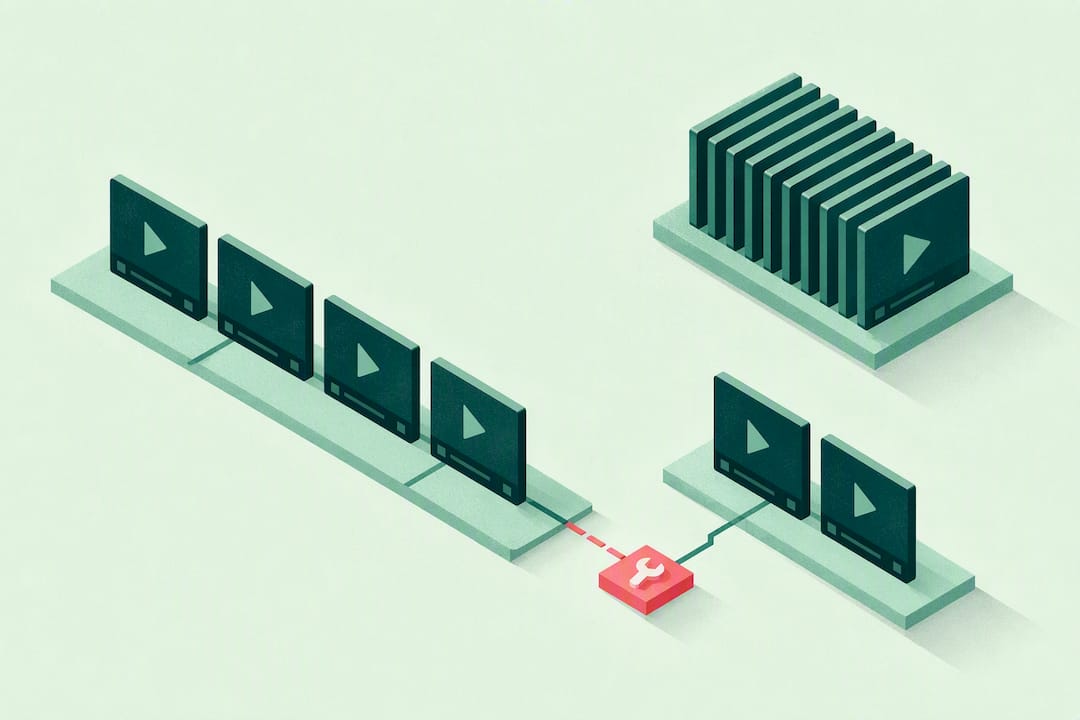
The inauthentic content policy (formerly repetitious content) is different. It's less about where the content came from and more about whether it looks mass-produced and generic. A channel that pumps out 30 identical-format videos a week using the same AI template, the same stock footage loop, and zero original thought is the target here. You can be using your own footage and still get hit by this policy if the output looks like a content farm.
Knowing which one actually got you rejected matters, because the fix is different for each.
What "Reused Content" Actually Looks Like to a Reviewer
A lot of creators assume reused content just means "stolen content." It doesn't, not exactly. YouTube's reviewers are looking at whether your channel adds meaningful value on top of existing material. And that's where it gets subjective, which is also why it's so frustrating.
The classic examples that get flagged: reaction channels that show the full clip and only say "wow" or laugh along. Compilation channels that grab the top 10 clips from Reddit, stitch them together, and add a voiceover that just describes what's already happening on screen. News channels that re-read headlines from other outlets without any original reporting or perspective. Gaming channels that just mirror someone else's stream.
Real talk: YouTube isn't opposed to reactions, compilations, or commentary. Those formats are explicitly named in the policy as things that get reviewed, not automatically rejected. The question is whether you're transforming the material. A reaction where you genuinely break down technique, share a unique perspective, or build a narrative around the clips? That can pass. A reaction where you run someone else's full video and giggle? Probably not.
What kills channels here is usually laziness, not malice. Creators find a shortcut and run it too hard, without stopping to ask whether they're actually contributing anything. YouTube's reviewers have seen every version of this, and they can tell the difference pretty fast.
The Inauthentic Content Policy: Who It's Actually Targeting
In January 2026, YouTube deleted sixteen channels in what AIR Media-Tech described as a coordinated sweep. That woke a lot of people up. These weren't small-time operations running stolen clips. Many were faceless automation channels that had been churning out AI-generated content at scale with no original angle, no unique perspective, nothing that differentiated one video from the next.
The inauthentic content policy targets mass-produced, repetitive content that feels like it came off an assembly line. YouTube's own language points to "generic automation, repetitive templates, and weakly modified reused material" as the kinds of things that fail. Notice that it says "weakly modified." You can use AI tools. You can automate parts of your workflow. The issue is when the final product looks like a thousand other videos that went through the same template mill.
Faceless channels get a lot of attention in this conversation, and I want to be clear: YouTube has confirmed that faceless and automation channels can still monetize in 2026. The policy isn't anti-AI or anti-faceless. It's anti-generic. There's a difference between a faceless channel that has a distinct voice, a consistent perspective, and videos that are actually useful to watch, versus a channel that generates text-to-speech over stock footage and calls it a documentary.
If you're building a faceless channel and want a more structured approach to doing it right, the YouTube Faceless Operator Program by Arnas Steponkus is a 1-on-1 coaching option that's specifically built around faceless long-form content. Not a course, actual coaching on your actual channel.
Why Your Channel Gets Flagged Even If You Think It's Original
This is the part that trips up genuine creators. You wrote the script yourself. You recorded original voiceover. You edited everything. And you still got rejected. What happened?
A few things can make a legitimately original channel look like a content farm to YouTube's review system:
Upload velocity. If you dumped 80 videos in two weeks before applying, that's a red flag regardless of quality. It looks like you bulk-scheduled content specifically to hit the watch hour threshold. Reviewers notice patterns like this.
Consistency of format without variation. If every single video is the exact same structure, same thumbnail layout, same script template, same stock footage sources, reviewers start to wonder whether there's a real creative mind behind it or just a workflow that got automated and left running.
Thin content. A five-minute video that covers a topic so shallowly it adds nothing to what a Google search would already give you is going to struggle. YouTube wants content that a viewer couldn't just get anywhere else. If your videos feel disposable, reviewers will treat them that way.
Your channel's overall coherence also matters. A channel that looks like it was built to game a threshold rather than serve an actual audience is going to get harder scrutiny. Think: wildly different niches crammed together, huge gaps between uploads before the submission rush, or a comment section that looks completely dead because nobody actually watches the content.

What Actually Passes the Review
Let's talk about what works instead of just what doesn't, because that's actually useful information.
The common thread in channels that pass monetization review is that they look like a real creator made a real decision about every video. That doesn't mean you can't use tools or AI assistance. It means the final product should have a point of view that's yours. A take. A perspective. Something a viewer would specifically come back to your channel for rather than just finding on a different channel that covers the same topic.
For compilation and reaction channels specifically: the more original commentary you add, the better. Ideally, your voice, perspective, or editing should be the main attraction and the clips should be supporting material, not the other way around. If someone could watch your video with the sound off and still get the same thing from a different channel, that's a problem.
For AI-assisted faceless channels: make sure the script has an actual argument or perspective running through it. Tools like Voclify's script writer can help you generate structured, topic-specific scripts, and it's worth noting that full disclosure, Voclify is our product. It's not perfect for every niche, but for channels that need consistent original scripts without a massive time investment, it does the job well. The point is that the script should sound like it was written for a specific reason, not generated and published without a second look.
Original research, real examples, specific opinions, humor, storytelling. Any of those things signal to a reviewer that a human being made choices here. And that's ultimately what the policy is asking for.
What Happens After Rejection and How to Come Back Stronger
YouTube does tell you the reason category when you get rejected, which is actually useful. If it says reused content, you know what you're dealing with. If it cites inauthentic content, that's a different cleanup job.
Either way, you typically wait 30 days before reapplying. Don't use that 30 days to just keep uploading the same type of content and hope the next reviewer sees it differently. Use it to actually fix the issue.
For a reused content rejection: audit your existing videos and ask honestly whether they add something real. If you have videos that are clearly just clip dumps with minimal added value, either delete them or significantly improve them before reapplying. Add genuine commentary. Extend your analysis. Make the clips serve your perspective rather than making your perspective serve the clips.
For an inauthentic content rejection: look at whether your upload history looks human. Spread out your schedule. Vary your formats. Make sure your thumbnail and title combinations don't all look like they came from the same generator run in the same afternoon. Reviewers are humans too, and they notice when something feels off even if they can't always articulate exactly why.
The bigger picture: a single monetization rejection isn't a death sentence. Channels get rejected and come back and pass all the time. What matters is that you understand why it happened and actually address it, rather than just reapplying and crossing your fingers. You can also explore the related posts on channel strategy here to sharpen your approach before your next application.
Key Takeaways
- Reused content and inauthentic content are two separate YouTube policies. Know which one caught you.
- Reused content isn't just stolen content. It's any content where you fail to add meaningful value on top of existing material.
- Inauthentic content targets mass-produced, generic, template-driven uploads regardless of whether the footage is technically original.
- Faceless and AI-assisted channels are still monetizable in 2026. The policy is anti-generic, not anti-AI.
- Upload velocity, thin content, and lack of creative variation can flag a channel even when the content is technically original.
- You get a 30-day window before reapplying. Use it to actually fix the underlying issue, not just wait it out.
- The through-line for passing review: does your channel look like a real person made real decisions, or does it look like a workflow that nobody's supervising?
FAQ
Does using AI to make YouTube videos count as reused content?
No, using AI tools to write scripts, generate voiceovers, or assist with editing does not automatically violate the reused content policy. YouTube confirmed in 2025 that AI use alone is not the issue. The problem is when AI-assisted content is generic, mass-produced, and adds no original perspective. A well-crafted AI-assisted video with a distinct point of view is treated the same as any other original video by YouTube's reviewers.
How long does YouTube take to review a monetization application?
YouTube's typical monetization review takes around 30 days, though it can be longer if your channel triggers a manual review flag, which reused or inauthentic content often does. If you're rejected, you have to wait at least 30 days before submitting a new application. Channels with cleaner upload histories and consistent original content tend to move through the review faster.
Can a compilation channel get monetized on YouTube?
Yes, compilation channels can get monetized, but it's harder than most creators expect. YouTube specifically names compilations as a format that gets reviewed for reused content. The channels that pass are the ones where the curation, commentary, or editing is genuinely the main value add, not just the clips themselves. Simply assembling other people's content without meaningful original contribution will get you rejected almost every time.

Get more of this in your Google results
Add voclify.io as a preferred source and Google shows you more of our articles in Search and AI Mode.