Every few months someone in my DMs sends me a screenshot of some guy's course sales page promising "$10k/month on autopilot" from YouTube automation. And every time, I feel this weird mix of amusement and frustration. Because the core idea isn't a scam. But the way it's sold? Absolutely is.
Let me give you the version nobody's incentivized to tell you.
YouTube Automation as Passive Income: What's Actually True
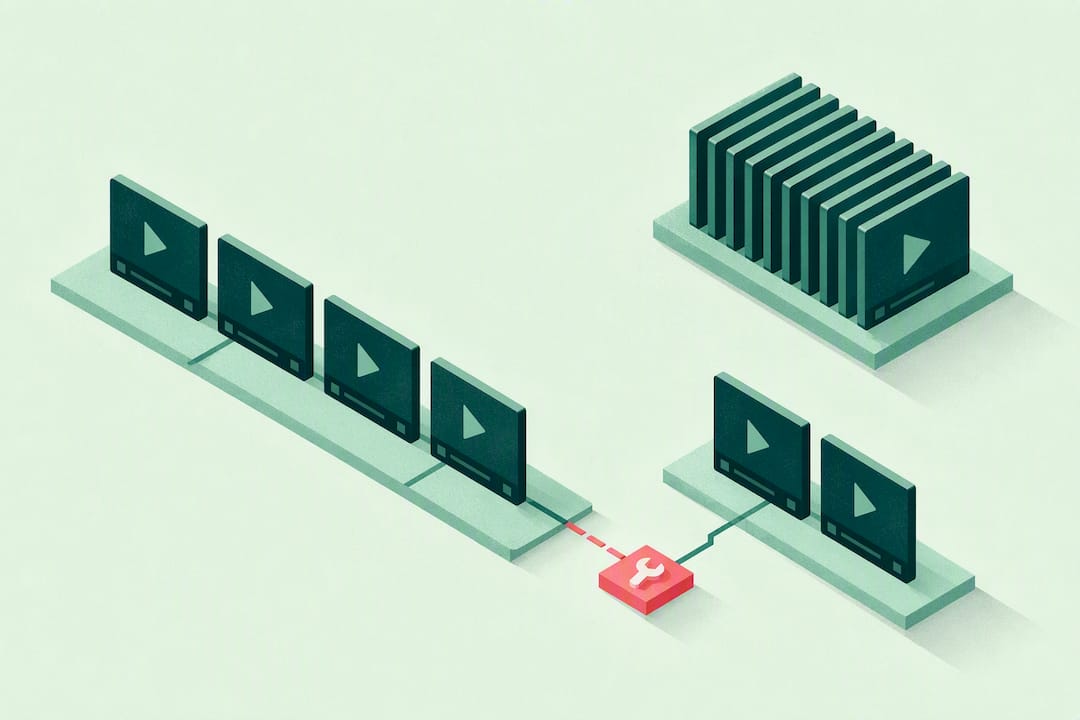
So here's the real definition of YouTube automation: you run a faceless channel where scripts, voiceover, visuals, and editing are handled by tools or freelancers instead of you sitting in front of a camera. You operate the business. You don't star in it.
That part is 100% legit. Lots of people do it. Real channels, real ad revenue, real money.
The problem is the word "passive." Because nothing about the early stages of this is passive. Not even close.
The fantasy version, the one being sold in every other YouTube ad right now, goes something like: spend 2 hours setting things up, let AI do the rest, watch money roll in. That version is fiction. Good fiction, apparently, because people keep buying it.
The Real Timeline Nobody Wants to Show You
Most faceless YouTube channels earn exactly zero dollars for the first 6 to 12 months. Not a little money. Zero. You're not even monetized yet.
YouTube requires 1,000 subscribers and 4,000 watch hours (or 10 million Shorts views) before you can join the YouTube Partner Program. For a brand new channel in a competitive niche, that can take the better part of a year. And during that whole period, you're paying for freelancers, tools, and time, while the channel gives you nothing back.
Sound familiar? That's because it's just... how starting a business works.
I'm not saying this to discourage you. I'm saying it because if you go in expecting passive income on month one, you'll quit on month two. And that's exactly what most people do. The quit rate on new faceless channels is brutal.
What "Active" Actually Looks Like in YouTube Automation
Even when you outsource everything, someone has to make the real decisions. That someone is you.
Niche selection matters enormously. Pick a low CPM niche and you'll earn a fraction of what someone in finance or software earns with the same view count. That's not a freelancer decision. That's a strategy decision. Your job.
Then there's quality control. I've seen plenty of channels where the operator just lets things run on autopilot and the quality slowly tanks. Viewers notice. Watch time drops. The algorithm buries them. You have to stay in it enough to catch that before it kills the channel.
And thumbnails. And titles. And responding to trends in your niche. And deciding when to post, how often, which videos to double down on based on analytics.
None of that is passive. That's active channel management. Which, to be fair, is way less work than filming and editing your own face every week. But it's still work.
When Does It Actually Start to Feel Passive?
Real talk: there is a point where YouTube automation starts to feel genuinely hands-off. But you usually have to grind to get there.
Once a channel is monetized, has solid SOPs (standard operating procedures) with reliable freelancers, and is publishing consistently in a niche that's working, the operator's time drops significantly. Some people genuinely get to a point where a channel runs on maybe 5 to 10 hours per week of their attention.
That's still not "passive" in the traditional sense, but it's pretty close. And that's the version worth working toward.
The people who hit that stage usually got there after 12 to 18 months of active work on their first channel. Then they use those systems and that cash flow to start a second channel with even better leverage. That's how you actually scale.
First channel: active. Second channel: easier. Third channel: now we're talking something closer to passive.
The Business Model Actually Works, But It's a Business
This is the reframe that changes everything. Stop thinking of YouTube automation as a passive income hack and start thinking of it as a media business you're building. One where you're the operator, not the talent.
When you see it that way, the work makes sense. You wouldn't open a restaurant and expect it to run itself in month one. You'd expect to work your face off for the first year, build systems, hire the right people, and then eventually step back. YouTube is the same.
The difference is the upside. A well-run faceless YouTube channel in a good niche can scale in ways a restaurant genuinely can't. You can spin up a second channel using the same playbook. You're not bottlenecked by physical capacity or geography.
So the model is real. The income potential is real. The "passive" part just comes later than anyone selling a course wants to admit.
What AI Tools Actually Help With (And What They Don't)
AI has genuinely changed the math on YouTube automation. Scripting, voiceover, even basic video editing, these tasks cost way less time and money now than they did three years ago.
Tools like Voclify's script generator or AI voiceover tools mean a solo operator can produce at a volume that used to require a small team. That's real. I'm not going to downplay it.
But AI can't pick your niche for you. It can't tell you why your watch time is dropping. It can't course-correct a channel that's plateaued. And it definitely can't keep you motivated through month four when the analytics are flat and you're questioning every decision you've made.
The human stuff, the strategy, the taste, the decisions, that's still on you. AI just makes the production side cheaper and faster.
Voclify's toolkit is honestly useful for the production side of things, things like titles, descriptions, scripts, and even channel branding. It's not going to run your business for you, but it does cut down the time per video meaningfully. That matters when you're trying to build volume early on.
What About People Who ARE Making Passive Income From YouTube Automation?
They exist. I'm not going to pretend they don't.
But here's what those people almost never mention in their highlight reels. Most of them worked extremely hard for 1 to 2 years before things got passive. Many of them failed on their first or second channel before something clicked. And a lot of them had some prior knowledge, either in SEO, copywriting, video production, or business operations, that gave them a head start.
The overnight success you see on YouTube almost always has a multi-year origin story hiding behind it.
That's not demotivating, by the way. It's just honest. If you know what you're actually signing up for, you're so much more likely to stick it out long enough to see the compounding kick in.
If you want proper guidance on building a faceless channel as an actual business rather than just winging it, the YouTube Faceless Operator Program is a 1-on-1 coaching option worth looking at. It's not a course you buy and forget. It's real coaching with feedback on your actual channel, which matters a lot more when you're trying to make real decisions.
The Course Seller Problem
Okay I'll say it plainly. A huge chunk of the YouTube automation content you'll find online is made by people whose primary income is selling courses about YouTube automation. Not actually running faceless channels.
That's a real conflict of interest. If someone's business depends on you believing YouTube automation is easy and passive, they're not going to lead with the 12-month grind. They're going to show you the highlight reel.
I'm not saying every course is garbage. Some of them have genuinely useful tactical stuff in them. But treat the income claims and lifestyle promises with serious skepticism. Ask for proof that's verified and audited. Ask how long it took them to get there. Ask what percentage of their students actually hit those numbers.
You deserve honest answers to those questions before spending money.
- Key Takeaway 1: YouTube automation is a real, legitimate business model. The passive income version takes 12 to 18+ months to build, not 2 weeks.
- Key Takeaway 2: You earn zero dollars until you hit monetization thresholds. Plan for that runway financially.
- Key Takeaway 3: AI tools genuinely reduce production costs and time, but strategy, niche selection, and quality control are still on you.
- Key Takeaway 4: The business model scales well once systems are in place. First channel is active work. Later channels get more passive.
- Key Takeaway 5: Most "passive income YouTube" success stories have a years-long active phase hiding in the backstory.
If you're building a faceless channel and want to cut down the time per video while keeping quality high, explore what Voclify's tools can do for your workflow. It's genuinely one of the more practical toolkits for channel operators, covering everything from scripts to titles to descriptions.
But the most important thing? Go in with clear eyes. Build it like a business. Give it real time. And stop waiting for passive income to show up before you've done the active work to earn it.
FAQ
How long does it take to make money from YouTube automation?
Most faceless channels take 6 to 12 months just to hit YouTube Partner Program requirements (1,000 subscribers and 4,000 watch hours). After monetization, meaningful ad revenue usually takes another 3 to 6 months to build up. Realistically, budget at least 12 to 18 months before a channel generates income that actually covers your costs.
Is YouTube automation actually passive income or is it a scam?
It's neither a scam nor truly passive, at least not early on. The business model is real and legitimate. Channels do earn real ad revenue without an on-camera creator. But the "passive" part only kicks in after you've built systems, hit monetization, and established a reliable production workflow. That process is active work for most of the first year.
How much does it cost to start a YouTube automation channel?
You can start lean with AI tools handling scripts and voiceover for under $100 per month. If you hire freelancers for scripting, voiceover, and editing, expect $300 to $800 per month depending on your posting frequency and quality standards. Most operators recommend having at least 3 to 6 months of budget saved before starting so you're not killing the channel early when it hasn't earned anything yet.

Get more of this in your Google results
Add voclify.io as a preferred source and Google shows you more of our articles in Search and AI Mode.