Why Your YouTube Audience Retention Sucks (And How to Fix It)
Real talk: if your average view duration is under 40%, you're bleeding viewers faster than a leaky faucet. I've been there. You spend hours creating what you think is amazing content, only to watch your analytics show a massive drop-off after 30 seconds.
Here's what I learned after analyzing retention curves on hundreds of videos. Audience retention isn't just about keeping people watching longer. It's about understanding exactly why people click away, then systematically fixing those pain points.
And honestly? Most creators are doing it completely wrong.
The Hook That Actually Hooks (Not the Fake YouTube Guru Stuff)
Everyone talks about hooks, but they're usually terrible at explaining what works. Look, saying "In today's video, I'm going to show you" isn't a hook. That's just an announcement.
A real hook creates immediate tension or curiosity. I started my last video with "This $50 tool just destroyed my $2,000 setup" instead of "Today I'm reviewing budget equipment." The retention difference? Night and day.
Try this: write your hook as if you're texting your friend something crazy that just happened. That natural urgency? That's what keeps people watching.
Pattern Interrupts: Why Your Brain Craves Them
Your viewers' brains are constantly looking for reasons to leave. Seriously. Every few seconds, they're subconsciously asking "Is this still worth my time?"
Pattern interrupts are your secret weapon. Change camera angles every 15-20 seconds. Switch between talking head shots and B-roll. Add sound effects when you make key points. Use jump cuts strategically.
I know it sounds gimmicky, but tools like Voclify can actually help you plan these retention elements when you're scripting. Their script writer suggests natural break points where you can add visual variety.
But here's the thing: don't go overboard. I've seen creators edit their videos like they're having seizures. Find the balance.
The Psychology Behind Why People Actually Stay
Want to know something wild? People don't stay for your content. They stay for the emotional payoff they think is coming.
Every successful YouTuber I know understands this. They're constantly promising micro-rewards throughout their videos. "Wait until you see what happens next." "The best tip is coming up." "You won't believe this result."
But you can't just tease without delivering. That's how you lose trust. Instead, deliver small wins throughout your video while building toward a bigger payoff. Give viewers a reason to stick around every 60-90 seconds.
This is also why curiosity gaps work so well when used correctly. You open a loop without immediately closing it, which creates tension that pulls people forward. The critical part is actually delivering on what you promised. Using curiosity gaps to bait people into watching and then not paying off is manipulation, and viewers figure it out fast. Use the technique honestly or skip it entirely.
Data-Driven Retention: Reading Your Analytics Like a Pro
Here's where most creators mess up. They look at their retention graph, see a big drop, and think "Well, that sucks." End of analysis.
Actually useful retention analysis looks like this: Where exactly do people drop off? What were you saying or showing at that moment? Was there a long pause? Did you go off on a tangent? Did your audio quality change?
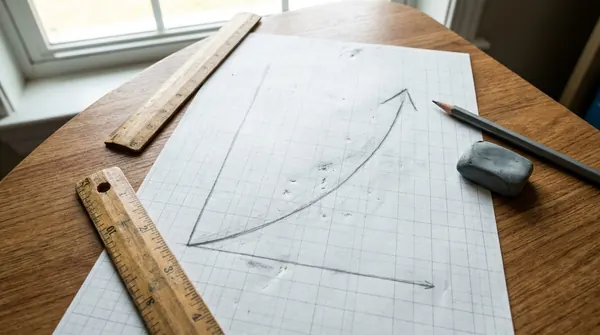
Every dip in your retention curve is feedback. I keep a spreadsheet tracking common drop-off points across my videos. Turns out, I was losing people every time I said "But first, let me tell you about today's sponsor." So I moved sponsors to the end. Boom, 15% retention improvement.
YouTube Studio's analytics are actually pretty good for this. Look at the audience retention tab, not just the overview. Click on specific videos and study those curves like your rent depends on it.
Why Retention Matters More Than Views
Here's something worth saying out loud because a lot of creators still haven't internalized it: the algorithm does not care how many people clicked your video. It cares how long they stayed.
A video with strong retention signals to YouTube that your content is worth watching. A video with weak retention, no matter how many views it gets, tells the algorithm that people regretted clicking. And the algorithm responds accordingly by burying your next videos too. That ripple effect is brutal and completely avoidable if you prioritize retention from the start.
Advanced Retention Tricks the Algorithm Loves
Okay, here's some stuff that actually works but nobody talks about:
The callback technique: Reference something from earlier in your video. "Remember that weird result I showed you 3 minutes ago?" This creates a sense of continuity that keeps people engaged.
Strategic pacing: Vary your speaking speed. Slow down for important points, speed up for transitions. Your voice is an instrument, use it that way. The same principle applies to your overall structure: fast pacing for setup and transitions, slower pacing when you're actually explaining something complex. Monotone delivery at a single speed is a retention killer that's easy to fix.
The preview technique: Show quick glimpses of your best content within the first 15 seconds. Like movie trailers, but for your video. This works especially well for tutorials and reviews.
Chapters as a psychological tool: Chapters aren't just for organization. When someone sees your video broken into clear sections, their brain thinks "okay, I can commit to just this next section." That lowers the perceived cost of continuing to watch. Use them intentionally.
Common Retention Killers (Stop Doing These)
Let me save you some pain. These retention killers show up in almost every struggling channel I analyze:
- Long intros: Nobody cares about your life story. Get to the point in under 10 seconds.
- Dead air: Those "um" filled pauses where you're thinking? Cut them. Every. Single. One.
- Repetitive content: Don't say the same thing three different ways. Pick the best version and move on.
- Poor audio quality: People will watch bad video, but they won't tolerate bad audio. Fix this first.
- Promising too much: If your title says "10 Tips" but you only have 3 good ones, people will notice.
- Predictable rhythm: Once viewers figure out your video's pattern, they start mentally checking out. If every segment follows the exact same structure with the same pacing, you're training people to tune out. Mix it up.
Tools That Actually Help (Without Breaking the Bank)
Look, you don't need expensive software to improve retention. But the right tools can definitely speed up the process.
Voclify's script writer has been solid for planning retention beats when I'm outlining videos. It's not perfect for everything, but for structuring content that keeps people watching, it's really helpful.
For editing, DaVinci Resolve is free and handles everything you need for retention-focused cuts. Audacity for audio cleanup. TubeBuddy for A/B testing thumbnails and titles.
But honestly? Your best tool is paying attention to your own viewing habits. When do you click away from videos? What makes you stay? Apply that self-awareness to your own content. If you get bored watching your own video back, that's not a subjective opinion. That's data.
Key Takeaways for Better YouTube Audience Retention
- Hook viewers with immediate tension or curiosity, not announcements
- Use pattern interrupts every 15-20 seconds to maintain engagement
- Promise and deliver micro-rewards throughout your video
- Analyze your retention graphs to identify specific problem areas
- Eliminate common retention killers like long intros and dead air
- Focus on emotional payoff, not just information delivery
Here's the bottom line: audience retention isn't about manipulating people into watching longer. It's about respecting their time and delivering genuine value consistently throughout your video.
Start with one of these strategies. Test it on your next three videos. Actually look at the retention data. Then come back and try another one. Your future self (and your subscriber count) will thank you.
FAQ
how often should you add pattern interrupts in a YouTube video?
The article recommends changing camera angles or switching between talking head shots and B-roll every 15 to 20 seconds. The goal is to give viewers' brains something new before they start looking for a reason to click away, but you should avoid overdoing it to the point where the editing feels chaotic.
what is a good average view duration percentage on YouTube?
According to the article, if your average view duration is under 40%, you are losing viewers at a problematic rate. Getting above that threshold is presented as a baseline goal before worrying about more advanced retention strategies.
how do you find out why people are dropping off your YouTube videos?
You should go into YouTube Studio and look at the audience retention tab for specific videos, not just the overview, and study exactly where the dips happen in the curve. The article suggests asking what you were saying or showing at that exact moment, whether there was dead air, a tangent, or an audio quality change, since every drop is essentially viewer feedback you can act on.
can a video with fewer views outperform one with more views on YouTube?
Yes, and this is one of the most important things to understand about how the algorithm works. A video with strong audience retention signals quality to YouTube, which affects how the platform distributes your content going forward. Weak retention on a high-view video can actually suppress your next several uploads because the algorithm interprets it as a sign that viewers regretted clicking.

Get more of this in your Google results
Add voclify.io as a preferred source and Google shows you more of our articles in Search and AI Mode.