You've got 3 seconds. Maybe 5 if you're lucky. That's how long viewers give your YouTube video before they decide to keep watching or scroll to the next dopamine hit. I've watched thousands of creators struggle with this exact problem, and honestly? Most of them are doing hooks completely wrong.
The biggest mistake I see isn't bad thumbnails or weak titles. It's creators who think a hook is just saying "Hey guys, welcome back to my channel!" and jumping straight into their content. That's not a hook, that's a funeral for your retention rate.
What Makes a YouTube Video Hook Actually Work
A real YouTube video hook does one thing: it creates a gap between what viewers want to know and what they currently know. Your job isn't to be friendly or introduce yourself. Your job is to make people psychologically uncomfortable with not knowing what happens next.
I learned this the hard way after watching my first 50 videos get buried by the algorithm. Then I started studying creators who consistently get millions of views, and I noticed something. They all use these specific hook structures that tap into basic human psychology.
The 3-Second Promise Hook
This is my favorite because it works on everything from tutorials to vlogs. You literally promise viewers they'll learn or see something specific, then immediately start delivering on that promise.
Bad example: "Today I'm going to show you how to make chocolate chip cookies."
Good example: "This one ingredient will make your chocolate chip cookies taste like they came from a bakery. I'm adding it right now."
See the difference? The second version creates immediate curiosity AND starts delivering value within seconds. No fluff, no introduction, just straight into the good stuff.
The Open Loop Formula
Open loops are psychological gaps your brain literally cannot ignore. It's the same reason cliffhangers work in TV shows. You mention something intriguing, then say you'll explain it later.
Here's how MrBeast uses this perfectly: "I'm about to give away a million dollars, but first, this person has to survive 24 hours in this box. And what happens next will shock you." He creates multiple open loops in the first 10 seconds.
The key is specificity. Don't say "something crazy happened." Say "what happened at 3 AM changed everything." Give just enough detail to hook them, not enough to satisfy their curiosity.
The Pattern Interrupt Hook
This one's pure gold for educational content. You start with something that contradicts what people think they know, then promise to explain why they're wrong.
"Everything you know about SEO is wrong, and I can prove it with this one Google search." Then you immediately show them that Google search. You're not making them wait 2 minutes for the payoff.
The pattern interrupt works because it literally stops people mid-scroll. Their brain goes "wait, what?" and they have to keep watching to resolve the confusion.
The Future-Proof Hook
This is where you tease a specific outcome or transformation that happens later in the video. But here's the secret: you show a quick preview of that result first, then rewind to the beginning.
"By the end of this video, my subscriber count will have doubled. But 20 minutes ago, I had no idea this would even work. Let me show you exactly what happened."
You're giving them a taste of the destination before taking them on the journey. It's like showing someone a photo of the amazing view from the top of a mountain before you start hiking together.
The Stakes-Raising Hook
Sometimes the best hook is making the stakes crystal clear upfront. What happens if they click away? What are they risking by not watching?
"If you're starting a YouTube channel in 2026 and you don't know these three algorithm changes, you're basically setting yourself up to fail. I wish someone had told me this when I started."
This works because it frames your content as essential information, not just entertainment. You're positioning yourself as someone who can help them avoid a real problem.
Common Hook Mistakes That Kill Retention
Look, I've made every hook mistake in the book. Let me save you some pain by pointing out the biggest ones I see creators making every single day.
The Introduction Trap
Stop introducing yourself in the first 30 seconds. I don't care if you're new. I don't care if you think it's polite. Your viewers didn't click on your video to learn your name. They clicked because your title and thumbnail promised them something specific.
Save the introductions for after you've delivered on your hook. Once someone has invested 2-3 minutes in your content, then they might care about who you are.
The Context Overload
"So before we get started, let me give you some background..." No. Just no. Your hook should drop viewers directly into the action. Context can come later, once they're already invested.
If you need context for your story to make sense, give the absolute minimum required and move on. You can always circle back and fill in details once you've got their attention locked in.
The Weak Promise
"I think this might help some of you" is not a hook. It's a suggestion. Your hook needs to be confident and specific about what value you're delivering.
Instead of "Here are some tips for better thumbnails," try "These three thumbnail tricks got me 10x more clicks in 30 days. Number two is controversial but it works."
Testing Your Hooks Like a Pro
Here's something most creators never do: they don't test their hooks systematically. They just hope for the best and wonder why their retention sucks.
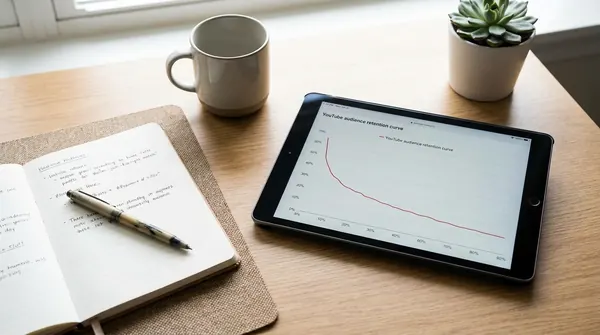
I started tracking my first 30-second retention rates for every video, and the patterns became obvious. Videos with specific, curiosity-driven hooks consistently held 70%+ of viewers past the 30-second mark. Videos with weak intros? Lucky to hit 40%.
Tools like Voclify can help you brainstorm different hook angles based on your content, but honestly? The best way to get better at hooks is to study what's already working in your niche.
Find the top 10 most-viewed videos in your space from the last 6 months. Watch the first 30 seconds of each one and ask yourself: what specific technique did they use to hook viewers? Then adapt that structure for your own content.
The 5-Hook Rule
Before I publish any video, I write 5 different potential hooks. Not just 5 different ways to say the same thing. Five completely different psychological approaches.
One might be an open loop. Another could be a pattern interrupt. The third might be a future-proof hook. Then I read them all out loud and pick the one that makes me most curious to keep watching.
This process has completely transformed my retention rates. It forces you to think beyond your first instinct and find the most compelling angle for your specific content.
Your Hook Toolkit: Quick Reference
Real talk: you don't need to reinvent the wheel every time you make a video. Here are the proven hook templates I use when I'm stuck:
- The Mistake Hook: "I made this mistake for 3 years, and it cost me thousands of subscribers"
- The Secret Hook: "This secret technique doubled my views, and nobody talks about it"
- The Transformation Hook: "30 days ago, my channel was dead. Here's exactly how I brought it back"
- The Challenge Hook: "I'm going to try something that might completely destroy my channel"
- The Discovery Hook: "I accidentally found the fastest way to grow on YouTube"
Pick one that fits your content, customize it with specific details from your video, and you're 90% of the way to a solid hook.
The truth is, most creators spend hours perfecting their content and 30 seconds thinking about their hook. That's backwards. Your hook determines whether anyone even sees your amazing content in the first place.
Start treating those first 30 seconds like they're the most important part of your video. Because honestly? They are. What hook formula are you going to try in your next video?
FAQ
how long do you actually have to hook viewers on YouTube before they click away?
You have about 3 seconds, maybe 5 if you're lucky, before viewers decide to keep watching or scroll to something else. That tiny window is why your opening needs to create immediate curiosity rather than easing people in with pleasantries.
what is the biggest hook mistake YouTube creators make?
The most common mistake is treating introductions as a hook, saying things like "Hey guys, welcome back to my channel" before jumping into content. Viewers clicked because your title and thumbnail promised them something specific, so save any introductions for after you have already delivered 2 to 3 minutes of value.
how much does a good hook actually affect viewer retention on YouTube?
Videos with specific, curiosity-driven hooks consistently held 70% or more of viewers past the 30-second mark, while videos with weak intros struggled to hit 40%. Tracking your first 30-second retention rate for every video is one of the most useful things you can do to see whether your hooks are actually working.

Get more of this in your Google results
Add voclify.io as a preferred source and Google shows you more of our articles in Search and AI Mode.